Define the work zones first
Map locations for material laydown, tool storage, lift charging, and pedestrian paths. Perimeter lines should protect the work without pinching truck turns or the approach needed for /telehandler-rental/ and /forklift-rental/ unloading.
Surface and site-stability planning considerations
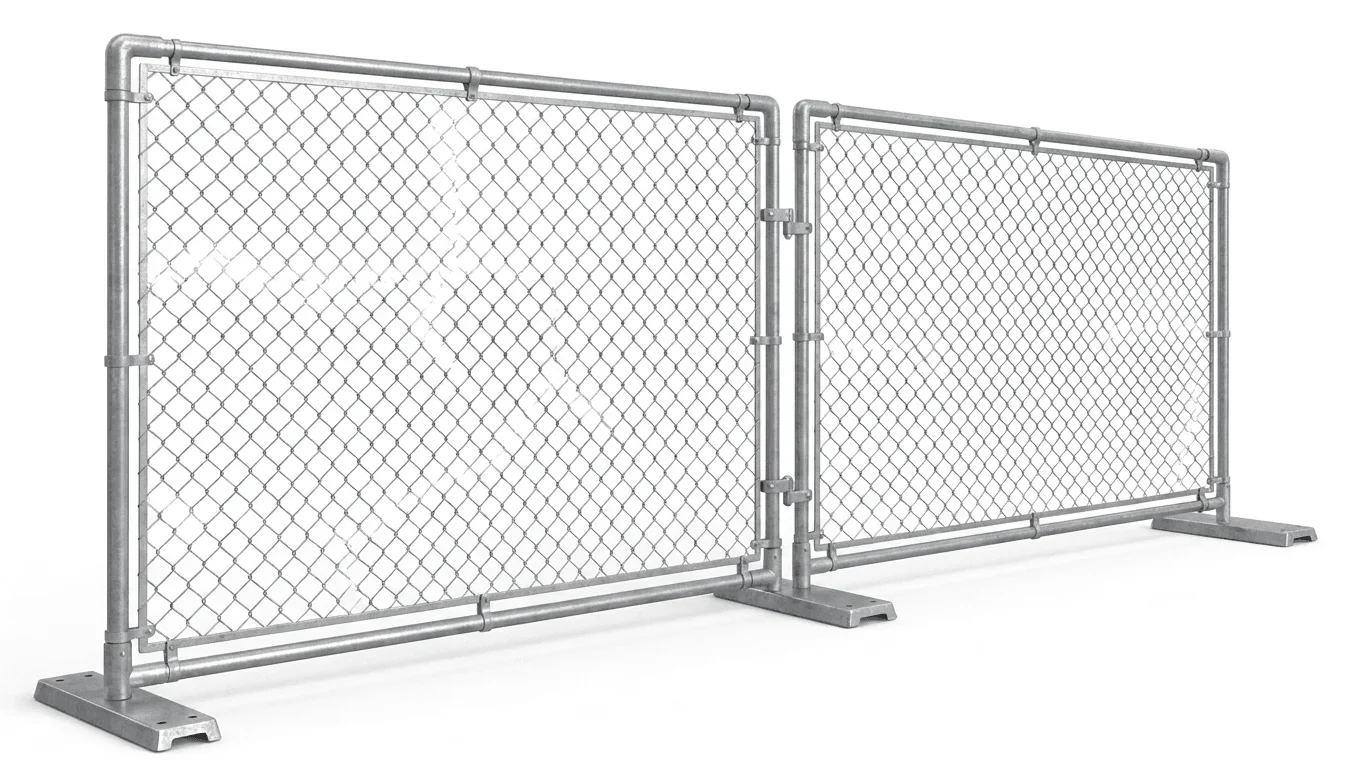
On paved aprons, panel bases sit predictably. On unpaved ground that softens when wet, base stability changes and low spots collect water. Plan wider standoffs at rutted sections and avoid routing heavy equipment along the same fence line.
Sightlines and lighting
Open sites can be dark at shift changes. Place barricades where they remain visible under portable lighting from /generators-light-towers-rental/. Keep corners and gate areas free of visual clutter so operators in /boom-lift-rental/ staging zones can see traffic movements.
Wind exposure and panel layout
Exposed areas around Wichita can experience gusty periods. Panel orientation, site-stability factors choices, and gate width should reflect the expected exposure. Actual conditions, the selected unit’s instructions, and site procedures govern how barriers are configured and maintained.
Gate planning for aerial work
If using /articulating-boom-lift-rental/ or /telescopic-boom-lift-rental/, confirm gate widths and turning room so machines can enter without striking panels. For indoor work transitioning to outdoor staging, ensure high-bay doors, ramps, and fence lines work together.